
Patients with Parkinson’s practice Tai Chi in new research study
30 June 2026 - Researchers at King's College Hospital are exploring how specialised Tai Chi sessions can help people living with Parkinson’s with their posture control and balance, and manage symptoms including fatigue, pain, and sleep disturbance.
Parkinson’s Disease is a progressive neurodegenerative disorder, characterised by slowness of movement, resting tremor, and stiff and inflexible muscles.
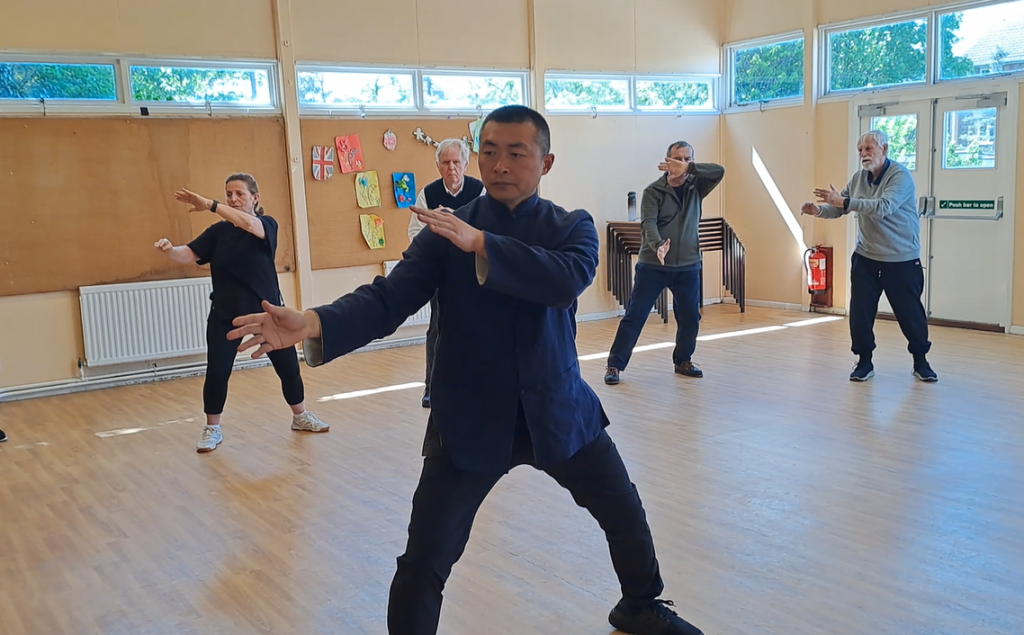
Over the past year, 30 adults living with Parkinson’s Disease across Kent and South East London have been taking part in the pilot study: Enhanced Tai Chi for Parkinson’s Disease. The research is investigating the benefits of a tailored Tai Chi programme, designed specifically to help with the physical and cognitive symptoms of Parkinson’s Disease.
Over the course of 12 weeks, participants were enrolled in a randomised study where half the participants took part in three Tai Chi sessions each week, delivered by a Tai Chi Grandmaster, with one session held in person and two online. The enhanced Tai Chi focused on balance control, coordination, postural alignment, body awareness, and confidence in movement. The remaining participants were assigned to the control group, who continued with usual care.
Julie Whitney, Consultant AHP for Older People at King’s, is leading on the study, which is taking place at the Parkinson’s Foundation Centre of Excellence. She explained: “Previous research has suggested that Tai Chi could bring health benefits for people with Parkinson’s, potentially helping to improve coordination, balance and wellbeing and there is good evidence it reduces falls in older adults. We are now investigating whether these enhanced Tai Chi sessions, tailored to people living with Parkinson’s, could have a meaningful impact on symptoms and quality of life.”
If you are a journalist and would like to find out more about this story, please contact us at [email protected]