King’s perform the first liver transplant through a new transplantation programme
06 July 2026 - 'Bringing hope to the thousands of people who are waiting for an organ donation’
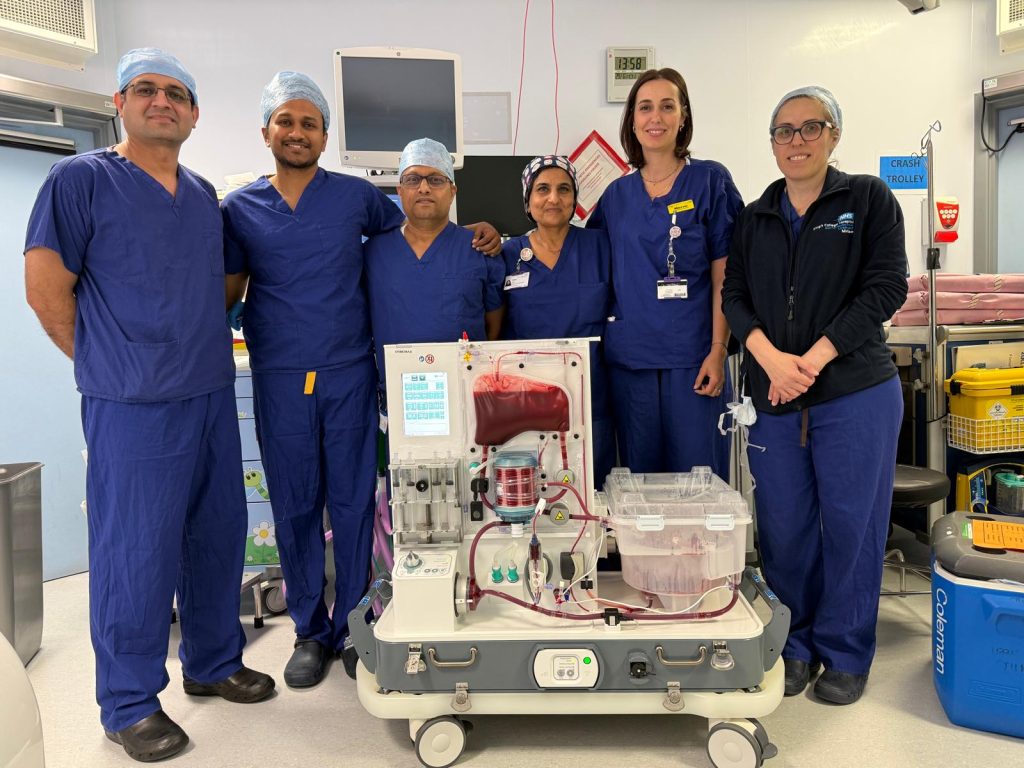
A pilot transplantation programme, which is estimated to enable up to 200 extra liver transplants a year if fully established, is now underway at three hospital trusts, including King’s.
NHS Blood and Transplant (NHSBT) is establishing a UK wide programme of Assessment and Recovery Centres (ARCs) for donated organs which would otherwise have not been transplanted. Organs are transferred to these specialist centres to have their function assessed in more detail. This is where they receive machine perfusion, when oxygenated blood or nutrient-rich fluids are circulated through organs, to preserve their function. This process creates critical extra time for clinicians to test how well the organs work, and allows more organs to be transplanted with confidence.
King’s College Hospital NHS Foundation Trust, Cambridge University Hospitals NHS Foundation Trust and Royal Free London NHS Foundation Trust are the first three pilot sites to test whether more donated livers can be used safely and effectively through the ARC programme.
If the pilot is successful and a full national ARC model is introduced, it would be the first nationwide network of its kind in the world. NHSBT estimates a full ARC national service would enable up to 200 extra liver transplants a year.
The King’s team who performed the first liver transplant through the ARC pilot
Ms Miriam Cortes-Cerisuelo, Liver Transplant Consultant Surgeon and clinical lead for transplant surgery at King’s College Hospital, said: “Over recent years there have been huge strides in organ donation and transplantation, and this has the potential to be the next step in saving patients’ lives. This ground-breaking procedure would not have been possible without the support of our multi-disciplinary teams, and staff at every level, including Mr Wayel Jassem, who carried out the UK’s first liver transplant through the ARC programme.
“This year marks 60 years since the Institute of Liver Studies was established at King’s, and we are excited to see how being part of this pilot could help transform the way we care for liver patients in the future, bringing hope to the thousands of people who are waiting for an organ donation.”
This year, King’s is celebrating six decades since the establishment of the world-renowned Institute of Liver Studies at King’s, leading to international breakthroughs in liver medicine, including the opening of the world’s first specialist liver intensive care ward in 1970, to the development of liver transplantation in 1989, and, in 1998, successfully introducing a programme of split liver transplantation.
If you are a journalist and would like to find out more about this story, please contact us at [email protected]