HIV, hepatitis B, and hepatitis C testing in GP practices
On 28 July 2026 – World Hepatitis Day – routine blood tests that South East London GP practices request may include HIV, hepatitis B, and hepatitis C screening.
If your GP requests a kidney blood test for you on 28 July, they may also request screening tests for HIV, hepatitis B, and hepatitis C.
Kidney blood tests are also known as renal function tests, or U&E (urea and electrolytes). If you are not sure which tests have been requested for you, ask your GP.
If you do not want to be tested, please let your clinician know.
Testing and early diagnosis can save lives
People who have HIV, hepatitis B and hepatitis C can often have no symptoms for many years. This means they may not know they are living with them.
Early diagnosis can save lives. Treatment and specialist support is available for free through the NHS.
Your results will be confidential
Your test results will be handled confidentially in the same way as all other NHS tests and medical records.
You can choose not to have the tests
You can opt out of testing. Let your clinician know at your appointment if you do not want to be tested for HIV, hepatitis B or hepatitis C.
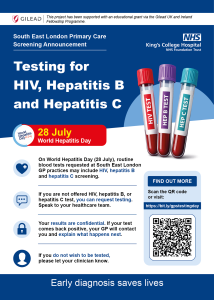
Poster in GP practices about testing for HIV, hepatitis B and hepatitis C
Why am I being offered the tests?
HIV and hepatitis often do not cause symptoms for many years. Many people do not know they have these conditions.
Routine testing helps identify HIV, hepatitis B and hepatitis C earlier, including in people who may not have symptoms. Finding these conditions early means people can get treatment and support sooner, helping them stay healthy and reducing the risk of passing them on to others.
Opt-out testing for HIV, hepatitis B and hepatitis C is already available in all Emergency Departments in London NHS hospitals. It has helped thousands of people get the treatment they need.
This one-off testing day offers the same in South East London GP practices, to help see if it can be offered routinely in GP practices.
How long will it take to get my results?
Results usually take up to 2 weeks. They are sent to your GP.
What happens if my test result is positive?
If one of your test results is ‘positive’, it means you may have that condition. Your GP will contact you to explain the next steps and support available.
Sometimes more testing may be arranged to confirm the result and treatment and care options. You may be referred to a specialist service for further assessment, treatment, and support.
All treatment for these conditions is free to everyone.
What happens if my test result is negative?
If your results are ‘negative’, it means the tests have found no signs of HIV, hepatitis B, or hepatitis C.
If your result is negative we will not usually contact you. But if your tests show anything you need to know, your GP will contact you.
Sometimes infections can take time to show in blood tests. If you think you may have been exposed to these infections recently, contact your GP practice or healthcare team. They may advise testing again at a later date.
What if I am not offered the tests?
If you are not offered the tests and you would like them, ask a member of the GP practice team. They will be able to arrange testing for you.
Prevention
There are ways to help protect yourself from HIV and hepatitis infection, including:
Do:
- get tested to know your status
- use condoms
- cover cuts and clean blood spills safely
- use tattoo and piercing services that follow safe hygiene and sterilisation practices.
- use HIV prevention medicines such as PrEP and PEP. They can be taken regularly, when needed, or after possible exposure to HIV. Please speak to your GP team or sexual health clinic for more information.
- get the hepatitis B vaccination if you are eligible
Don’t:
- share personal items that may contain small amounts of blood. For example, razors or toothbrushes.
- share injecting or snorting equipment.
Find out more
HIV
- NHS – HIV and AIDS – NHS information about HIV symptoms, testing and treatment.
- Do It London – Information about HIV testing, prevention and support services in London.
- Terrence Higgins Trust – HIV information, advice, prevention and support services.
Hepatitis B
- NHS – Hepatitis B – NHS information about hepatitis B, including symptoms, vaccination and treatment.
- Hep B Companion – Information and peer support for people affected by hepatitis B.
- British Liver Trust – Information and support for people affected by liver disease and hepatitis.
- King’s College Hospital Hepatitis B patient information leaflet (PDF) – Download detailed patient information about hepatitis B.
Hepatitis C
- NHS – Hepatitis C – NHS information about hepatitis C symptoms, testing and treatment.
- Hepatitis C Trust – Support, advice and information about hepatitis C testing and treatment.
- NHS Hepatitis C Test at Home – Free confidential hepatitis C home testing service available in England. Order your free home test kit online.
- King’s College Hospital Hepatitis C patient information leaflet (PDF) – Download detailed patient information about hepatitis C.
Need more information?
Please contact your GP practice, sexual health service, or healthcare team.
With support from:

This project has been supported with an educational grant via the Gilead UK and Ireland Fellowship Programme.
The following organisations are working together to support HIV and hepatitis testing in South East London: