“The scar I bear is a reminder of what I did to save my son’s life”
26 August 2026 - Summiya Begum shares her story of becoming a living organ donor to save her son
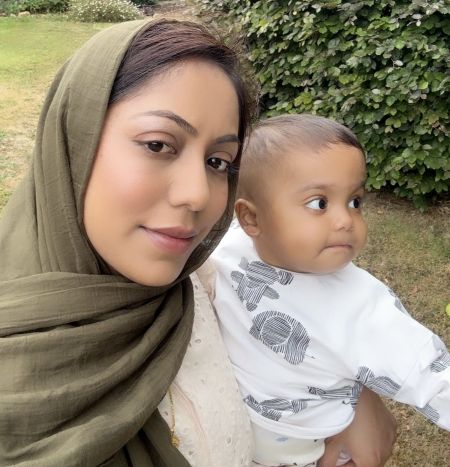
In the year King’s celebrates 60 years of liver services, we speak to Summiya Begum, from London, who was able to become a living organ donor, giving her son the gift of life.
Two-year-old Yasin Khan was born with biliary atresia (BA); a rare disease of the bile ducts affecting newborn babies, which can cause serious liver damage. In 2025 specialists at King’s College Hospital NHS Foundation Trust told Yasin’s parents he urgently needed a liver transplant.
Summiya Begum, Yasin’s mother, said: “We were initially hopeful when we discovered Yasin had been listed as a priority for transplant, but we soon realised that there was a shortage of donors. Realising the urgency of the situation, I decided to be tested as a potential living donor.”
Most organ and tissue donations come from people who have died, but you can donate some organs while you are alive; this is called living organ donation. Doctors will look at many factors before deciding if someone is suitable. These include an assessment of age, health and social circumstances. They do an assessment to see if you have potential risks that could lead to problems if you do donate. Summiya was confirmed to have an O blood group, and could potentially act as a donor for Yasin, even though he has a different blood group (group B). People with Group O blood can donate to every other group.
After five months of thorough testing, Summiya was confirmed as a suitable donor, and had the opportunity to save her son’s life. On April 16th both surgeries took place, with Yasin’s operation lasting eight hours, and Summiya’s procedure lasting six hours.
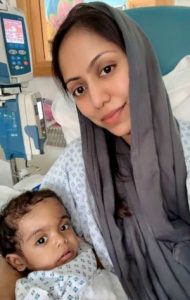
Summiya said: “Being a living donor to my son was by far the hardest thing I have ever done. I had to be separated from Yasin for the very first time, and it was extremely challenging for my two older children, who were five and seven years old at the time . The recovery involved managing intense pain from a large vertical incision, limited mobility, and an inability to lift anything heavy, including my son. It was physically and emotionally intense, but I feel privileged to be Yasin’s donor, and I would do it again in a heartbeat. The scar I bear is a reminder of what I did to save my son’s life and something I will always be proud of.
“It hasn’t been an easy road to recovery for Yasin. Many people assume that once a child has a transplant, life simply returns to normal. The reality is very different. Although the transplant saved Yasin’s life, he remains very fragile due to the immunosuppressive medication to prevent organ rejection, which leaves him much more vulnerable to infections and repeated hospital admissions. Despite this, we’re trying to stay as active as possible as a family, while doing everything we can to keep him safe. And there’s no doubt that Yasin is so much healthier now.
“Seeing Yasin bursting with energy, just like any other toddler his age means more than I can say. It feels like our whole family has been given a second chance of life. We do not take anything for granted – everyday things, like the school run or a trip to the supermarket have become so precious.”
Matilda Guyatt, Live Donor Liver Coordinator at King’s College Hospital, said: “We are in a privileged position where we see the life-changing impact of organ donation every day, and it is wonderful to see Yasin on the road to recovery after his transplant. Seeing both mother and son beginning to enjoy family life again is incredibly rewarding for us all at King’s.
“The journey to become a living donor is not without its challenges, and should never be taken lightly, but Summiya’s dedication and commitment to doing her utmost for Yasin was truly inspirational.”
Summiya added: “I feel very lucky that they were both a success. The surgical team at King’s that operated on both myself and Yasin were absolutely fantastic. We were in the best hands possible, and we will forever be grateful for their skills, professionalism, and care. They are superheroes.”
If you are a journalist and would like to find out more about this story, please contact us at [email protected]