
Orpington Hospital introduces robotic-assisted surgery for bones and joints
31 July 2026 - Robot-assisted surgery to help speed up recovery time
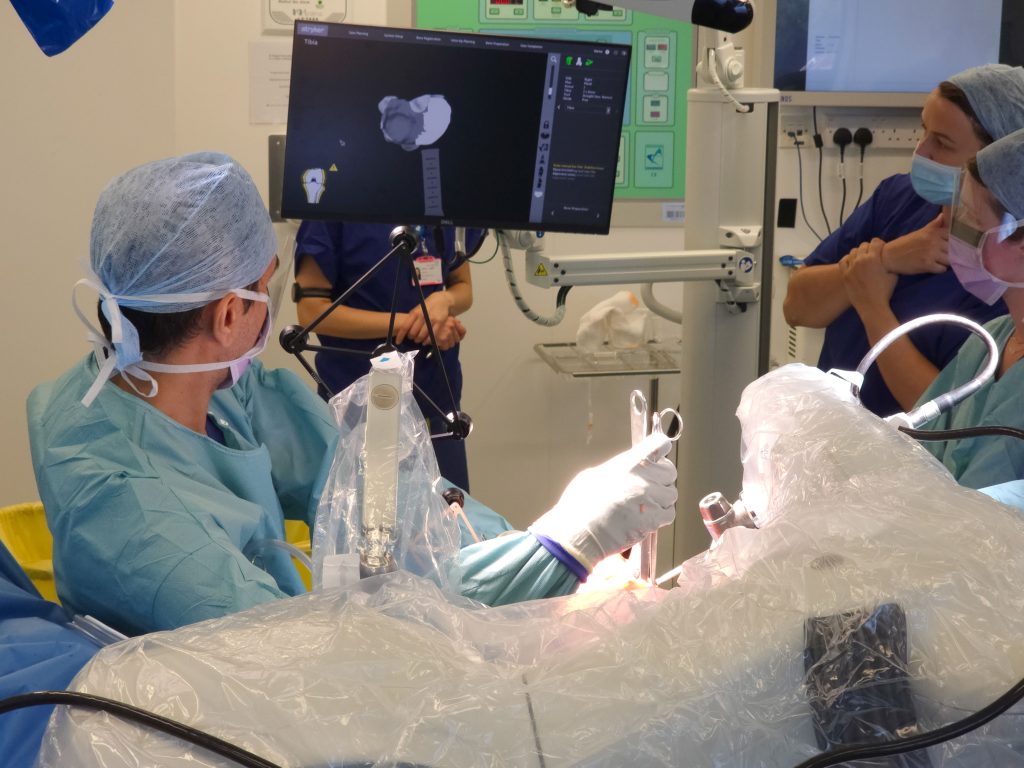
The Elective Orthopaedic Centre at Orpington Hospital has become the first NHS centre in South East London to introduce robot-assisted surgery.
The Stryker Mako is a robotic-arm surgical system used for joint replacement procedures, specifically total hip, total knee, and partial knee replacements.
The technology uses the pre-operative scan of a patient’s joint to map out the precise implant position. The surgeon, with the assistance of the robotic arm, receives tactile feedback whilst removing any damaged bone, helping to protect healthy tissue. As the patient is moved during surgery, the robot cameras instantly adjust and adapt to the live changes, helping surgeons to maintain accuracy. The computer always knows exactly where the bone is.
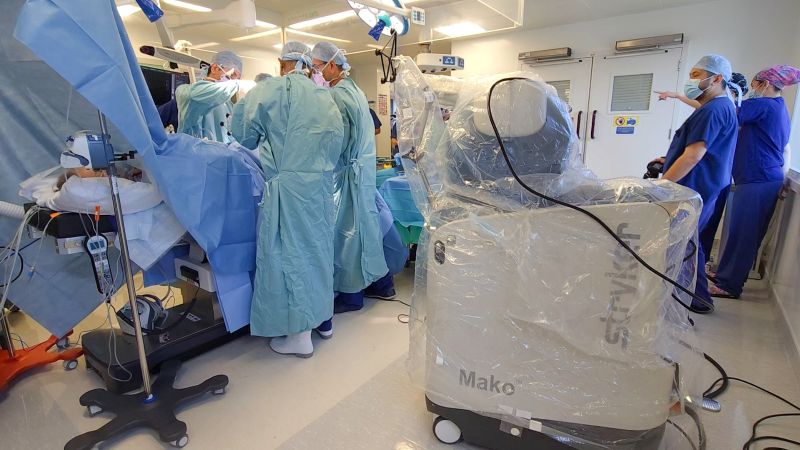
Mr Abhinav Gulihar, Clinical Director of Orthopaedics at King’s College Hospital NHS Foundation Trust, said: “This is a really exciting time for the Orthopaedic team at Orpington Hospital, with many team members who have been training to use this technology for years.
“Initially, our robotic surgery will focus on knee and hip replacement procedures, but as more of our clinical teams complete their training, we hope to expand the service and offer robotic-assisted surgery to all patients undergoing joint replacement (arthroplasty) where it is clinically appropriate.”
Orpington Hospital is a specialist, purpose-built facility managed by King’s College Hospital NHS Foundation Trust, providing planned inpatient and day-case bone and joint surgery. The orthopaedic service aims to carry out around 100 procedures each year using the new technology, with patients set to benefit from faster rehabilitation and shorter hospital stays.
Dr Anneliese Rigby, Consultant Anaesthetist at King’s College Hospital NHS Foundation Trust, said: “This latest technology gives a more precise and accurate approach to knee and hip replacement. Our aim with any patient undergoing knee or hip surgery is to help get them moving again and enjoying everyday life. By using robotic surgery, we can help reduce pain post-operation, and potentially speed up that recovery time.”
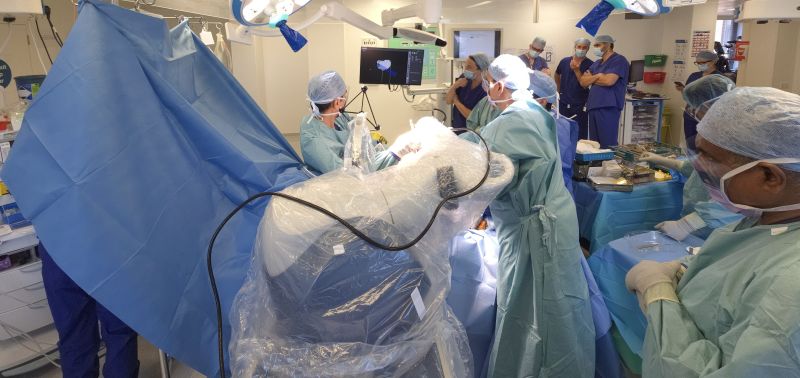
Matthew Trainer, Chief Executive of King’s College Hospital NHS Foundation Trust, added: “Innovation is at the heart of what we do here at King’s, so it’s great to see the Orthopaedic team at Orpington excelling in that. It is the result of hard work by a fantastic team who have put our patients first. We can now build on that by educating and training the next generation of specialists in this very exciting field.”
If you are a journalist and would like to find out more about this story, please contact us at [email protected]