“Saving my son remains the greatest privilege of my life”
01 September 2026 - Harry's father donated part of two organs in extremely rare transplant case
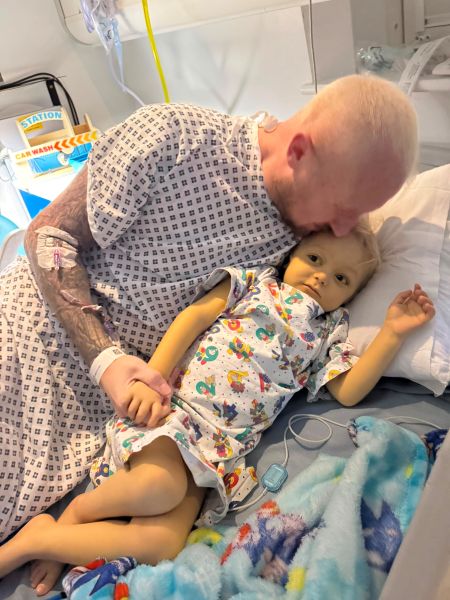
Harry Jackson, now six years old, was born with malrotation, a congenital condition in which the bowel does not form in the correct position inside the abdomen. He also went on to develop intestinal failure-associated liver disease (IFALD), a progressive liver condition caused by years of receiving an intravenous form of feeding. In December 2023, Harry’s parents, Annie and Gary, met with the transplant team at King’s College Hospital to discuss the possibility of a liver and bowel transplant.
“When Harry was diagnosed with malrotation, we always knew that a bowel transplant would likely be part of his journey one day,” Annie said. “We just hoped that day would be many years away. When his liver began to fail, everything changed. Suddenly we were faced with the reality that he needed both a liver and bowel transplant much sooner than we had ever imagined.
“There are hundreds of children like Harry waiting for the phone call that could save their lives. As parents, you feel completely helpless watching your child wait for something so uncertain. The thought that one of us might be able to donate and give Harry that chance was something we wanted to explore immediately. If there was any possibility we could help him ourselves, we had to try.”
Following weeks of extensive assessments, Gary was confirmed to be a 98% Human Leukocyte Antigen (HLA) match with Harry, meaning their immune systems were exceptionally similar. HLA matching is the process of comparing HLA markers between a donor and a recipient to predict transplant compatibility. A closer HLA match significantly reduces the risk of transplant rejection.
On 29 January 2025, Gary underwent surgery at King’s College Hospital to donate part of his liver and small bowel to his son in a groundbreaking living donor transplant that gave Harry a second chance at life.
Gary added: “When you’re a parent, you’d give your child anything in a heartbeat. So when I was told I could donate part of my liver and bowel to Harry, there was never a decision to make. I was just incredibly grateful that I had the opportunity to do something that could help save his life and give our little boy a second chance. The journey to surgery wasn’t easy. I had to lose six stone, follow a strict diet, completely give up alcohol and stay focused for months to make sure I was healthy enough to donate. It was physically and mentally demanding, but every challenge felt worthwhile because it meant I was one step closer to helping Harry.
“The operation itself lasted 17 hours and my recovery took around six weeks. It was tough, but nothing compares to seeing Harry looking healthier and stronger afterwards. Watching him recover and knowing that I had been able to play such a significant part in giving him that chance is something I’ll never be able to put fully into words. It remains the greatest privilege of my life, and I would do it all again without a second thought.”
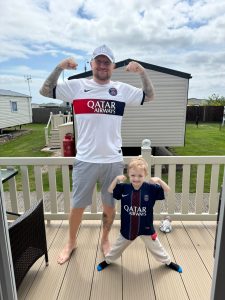
Professor Nigel Heaton, Consultant Transplant Surgeon at King’s, led the team which carried out Harry’s organ donor surgery. He said: “From the first meeting, it was very clear that Gary was set on doing all he could to help Harry recover. He took the idea of living donation very seriously and reduced his weight through healthy eating and exercise. The surgery was performed through a vertical scar in the upper abdomen and removed about 20% of Gary’s liver and one and a half metres (4-5 feet) of the small bowel (normal length 20 feet). Gary was always positive and uncomplaining, and recovered very quickly.”
Since the establishment of the world-renowned Institute of Liver Studies at King’s, the Trust has been at the forefront of international breakthroughs in liver medicine, including the opening of the world’s first specialist liver intensive care ward in 1970, to the development of liver transplantation in 1989, and, in 1998, successfully introducing a programme of split liver transplantation.
Ms Miriam Cortes-Cerisuelo, Liver Transplant Consultant Surgeon and clinical lead for transplant surgery at King’s, said: “There are a number of benefits to living organ donation. The donated organ is in excellent quality from a healthy donor, and the process allows better preparation and planning for the surgery. As a result, there are much better chances of success for the transplant.
“However, living donor transplants involving the small bowel and liver, such as the one that saved Harry’s life, are extremely rare. There are around just 10 cases worldwide that we know of, all involving children.
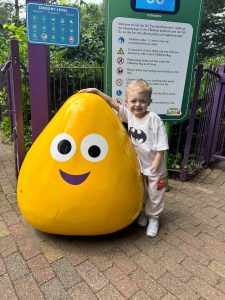
“In addition to carrying out Harry and Gary’s donor transplant surgery, the Liver Unit at King’s has conducted one other living donor combined liver and bowel transplant, the only two cases of this kind to take place in the UK. It was a privilege to be part of the team caring for Harry and Gary. The family’s resilience, strength of mind and positivity were an inspiration.
“This year marks 60 years since the establishment of the Liver Unit at King’s College Hospital, and we have performed over 300 living donor liver transplants – one of just three NHS centres in the UK to provide this service (including Leeds and Birmingham).
“At King’s, we are also able to perform the largest number of living donor liver transplants in children in UK, between 14-16 each year. Sadly, with hundreds of patients on the active transplant list, we know how important it is to keep growing and expanding our living donor transplant services.
“Living donation is not always an option for our patients waiting for a small bowel transplant. Our work would not be possible without the generosity of people who sign up to the NHS to become an organ donor and give the gift of life, and their families who supported their decision.”