#NewProfilePic for March 2026
02 March 2026 - Every month, a different member of staff will be our #NewProfilePic on social media.
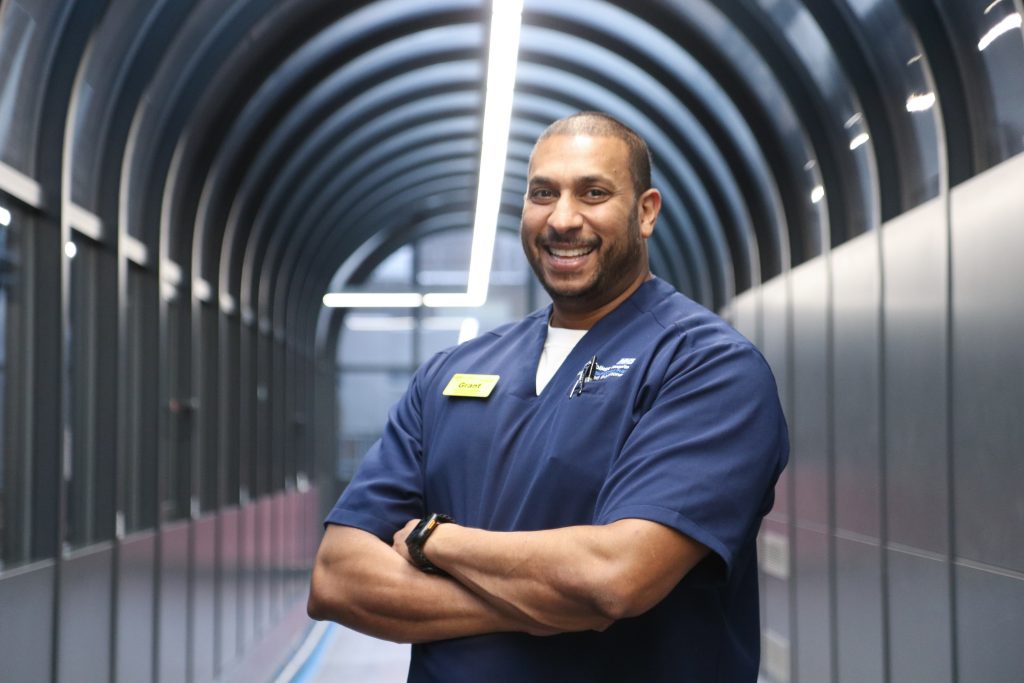
This month’s New Profile Pic series features Grant, an Advanced Clinical Practitioner for the Acute Oncology Service at King’s College Hospital.
Grant says: “I’ve stayed at King’s because of the people. I’ve worked with and met some of the most dedicated, funny, resilient humans you could ask for.”
What does your role consist of?
“I am part of a wonderful team that includes Clinical Nurse Specialists, Advanced Clinical Practitioners, Oncologists and administration staff who support patients who become unwell due to cancer. Our service is advisory, a bit like a weather forecast…we can see that the rain is coming and we suggest an umbrella. The admission team keeps overall responsibility for our patients, but we provide the oncology lens: spotting treatment toxicities, advising on oncology emergencies, helping with new diagnoses, and making sure the right specialists are involved, quickly. I also spend a lot of time teaching staff how to recognise oncology red flags and provide more confidence in managing them.”
How long have you been working with King’s, and why do you like it?
“I joined back in 2017 at Princess Royal University Hospital (PRUH), working in the Chemotherapy Day Unit, and I honestly thought I’d just be getting stuck into day unit life, but a couple of inspiring managers and colleagues saw something in me and encouraged me onto the ACP (Advanced Clinical Practice) pathway. That kind of support sticks with you. I’ve stayed at King’s because of the people. I’ve worked with and met some of the most dedicated, funny, resilient humans you could ask for. It’s busy, it’s intense, and some days are chaos, but you always have support. It’s the kind of team who will counsel you, support you, teach you, laugh with you, and occasionally hand you a biscuit when the shift’s been long.”
What makes your role special to you and the patients you care for?
“Occasionally, we meet people on some of their worst days, when they’re scared, unwell, or just completely overwhelmed, and we get an opportunity to make things feel a bit more manageable. Sometimes it’s big, urgent decisions and sometimes it’s just explaining things. I love helping patients and their families understand what’s happening. It’s not just blood results or scans; you’re looking after a person. If we can make it a little less frightening, that feels pretty special.”
A special moment that you’ve experienced at work?
“A young, fit and well man, a social worker by profession, came in the emergency department with a suspicious lesion on his brain. At first glance it looked like it could be something serious, possibly malignancy, so he was referred onto our Malignancy of Unknown Origin (MUO) pathway, and we started the full diagnostic work alongside the medical team. Those conversations are heavy, and you could see the fear in him and his family. Further tests went onto show that it was something very treatable. I’ll never forget telling him. The relief was instant. He cried, his family cried, and he gave us the biggest hug. It was one of those moments that reminds you this job isn’t all bad news and difficult conversations, sometimes you get to be the person who brings hope back into the room, and that stays with you long after the shift ends.”